Get safe + get care
Call 911 when appropriate, document symptoms, and follow medical advice. Michigan State Police says reportable crashes should be reported to law enforcement immediately.
Michigan-focused legal help for people injured in car, semi-truck, motorcycle, pedestrian, bicycle, rideshare and other vehicle crashes.
Call 911 when appropriate, document symptoms, and follow medical advice. Michigan State Police says reportable crashes should be reported to law enforcement immediately.
Photos, video, witness names, dashcam footage, vehicle damage, road conditions, and the police report can become critical evidence.
Michigan cases can involve first-party no-fault/PIP benefits and, when legal requirements are met, a separate liability claim against an at-fault party.
Official sources: Michigan State Police crash reporting · Michigan DIFS Auto Insurance
Commercial carriers, logbooks, electronic data, maintenance and multiple potential defendants.
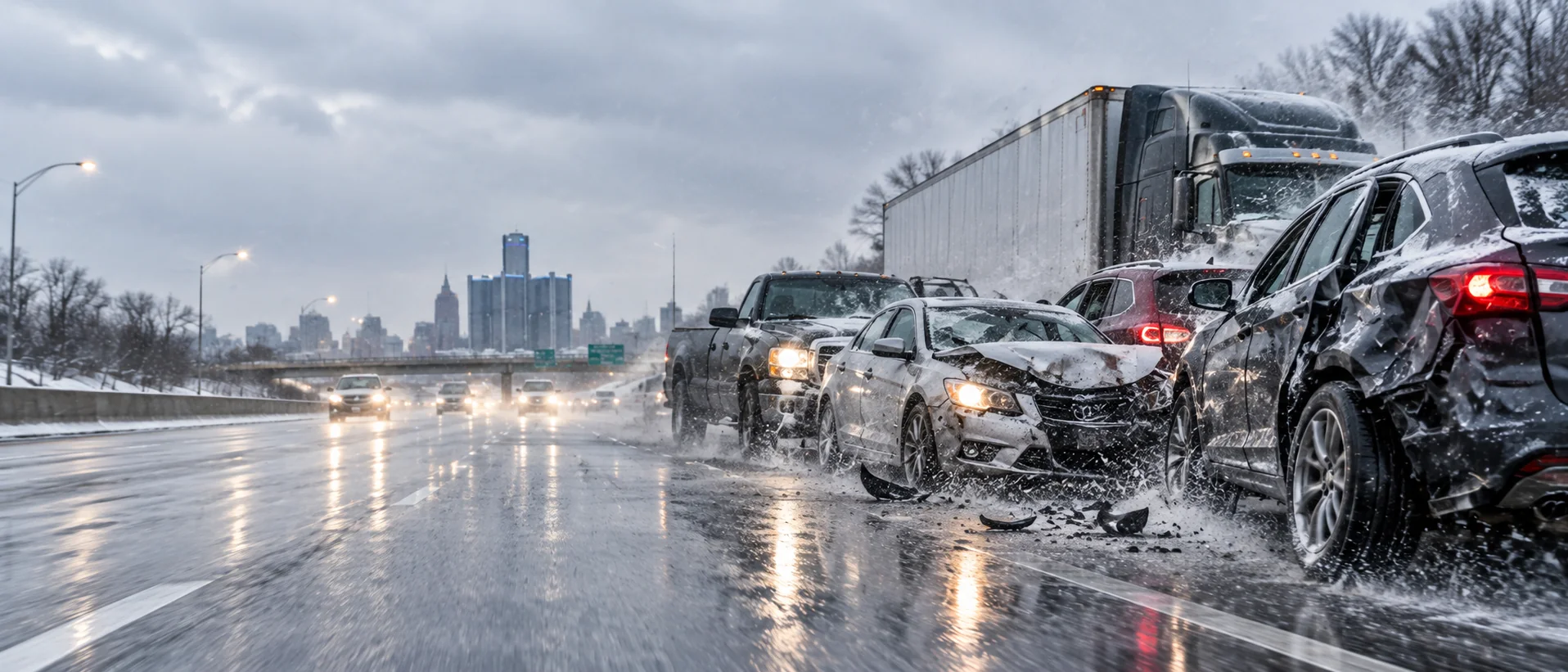
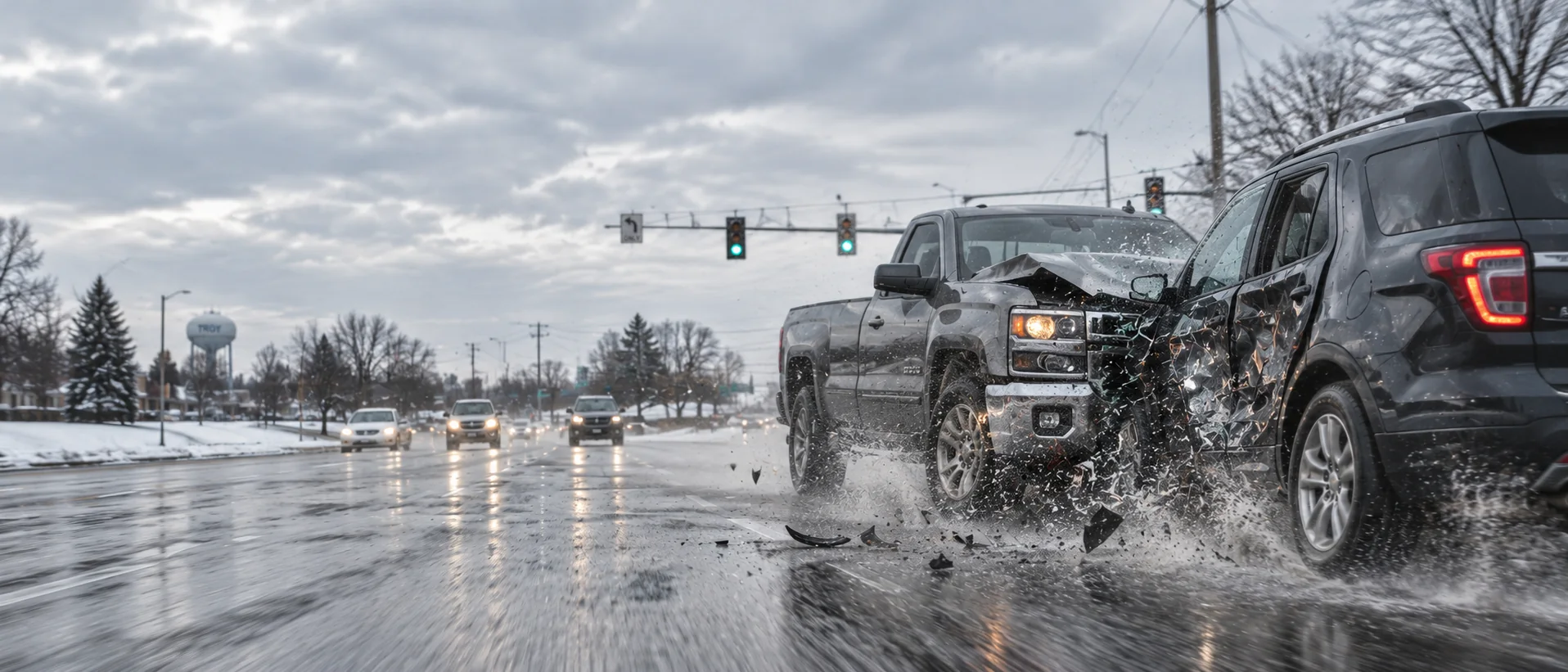
Explore this case type ↗Rear-end, intersection, head-on, rollover, highway and chain-reaction crashes.
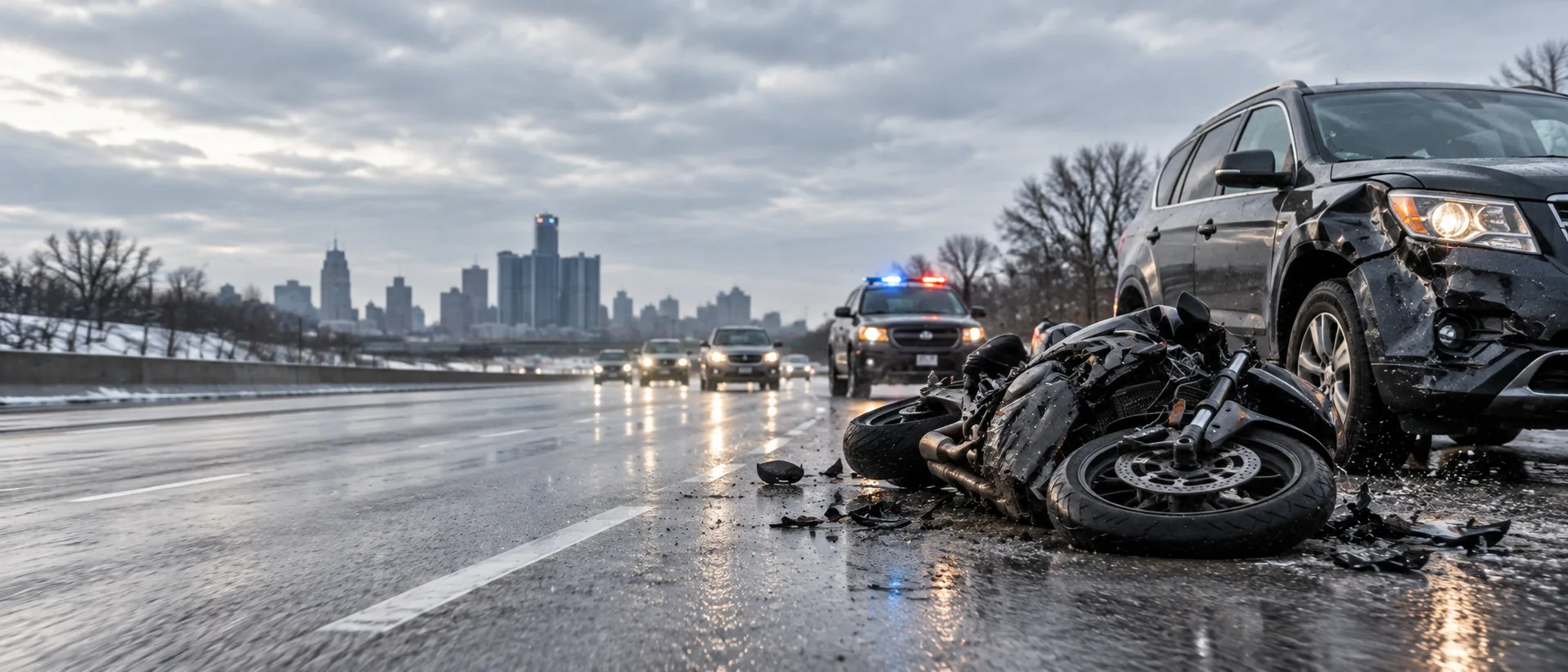
Explore this case type ↗Motorcycle-specific no-fault rules, severe injuries and visibility disputes.
Explore this case type ↗Crosswalk, turning, dooring, distracted-driver and roadway injury claims.
Explore this case type ↗Uber, Lyft, Amazon-style delivery, courier and app-based commercial driving.
Explore this case type ↗Wrongful-death claims involving loss, support, companionship and estate procedure.
Explore this case type ↗Michigan’s system separates certain no-fault benefits from tort claims against an at-fault driver. The rules depend on the injury, insurance status, damages claimed, and other facts.
Understand Michigan vehicle lawMichigan offers multiple PIP medical coverage levels, including unlimited coverage and several lower-limit or qualifying exclusion/opt-out options.
Michigan law permits noneconomic-loss claims when statutory requirements such as death, serious impairment of body function, or permanent serious disfigurement are met.
Michigan comparative-fault rules can reduce damages, and fault above 50% can eliminate noneconomic damages in covered tort actions.
For qualifying crashes after July 1, 2020, Michigan’s limited property-damage rule can allow recovery of up to $3,000 of uninsured vehicle damage.
Sources: DIFS PIP choices · MCL 500.3135 · MCL 600.2959 · DIFS Mini-Tort FAQ
Crash investigation
Insurance + PIP review
Medical documentation
Liability demand / negotiation
File civil complaint
Discovery + depositions
Mediation / case evaluation
Trial or settlement
Use the Michigan Vehicle settings screen to add the lawyer’s biography, experience, credentials, and approach to representing people injured in Michigan vehicle crashes.
Use this intake to give the firm the basic information needed to review a Michigan vehicle accident. Your submission is saved in the WordPress admin and sent to the firm’s designated intake email.
✓ Car, truck, motorcycle, pedestrian and other crashes
✓ Michigan no-fault / PIP issues
✓ Liability and civil lawsuit questions
✓ Wrongful-death and serious-injury matters
These are general explanations, not legal advice for a specific crash.
Yes. Michigan remains a no-fault state, but policyholders now choose from several PIP medical coverage options. No-fault benefits and liability claims are different parts of the analysis.
Potentially. Michigan law preserves tort liability for certain losses, including noneconomic loss when the statutory injury threshold is met. The facts, insurance status, fault and damages all matter.
Michigan generally uses a three-year limitations period for actions involving injury to a person or property, but shorter notice or claim rules can apply to particular benefits, defendants or circumstances. Do not use a general deadline as a substitute for case-specific advice.
Michigan mini-tort is a limited property-damage remedy. DIFS states that qualifying claims for accidents after July 1, 2020 can reach up to $3,000.
Michigan uses comparative-fault rules. Fault can reduce damages, and in covered tort claims fault greater than the combined fault of others can bar noneconomic damages.
No. Sending the form is a request for review and does not create an attorney-client relationship. Representation begins only after the law firm accepts the matter and any required agreement is completed.
Sources: Michigan DIFS · MCL 500.3135 · MCL 600.2959 · MCL 600.5805